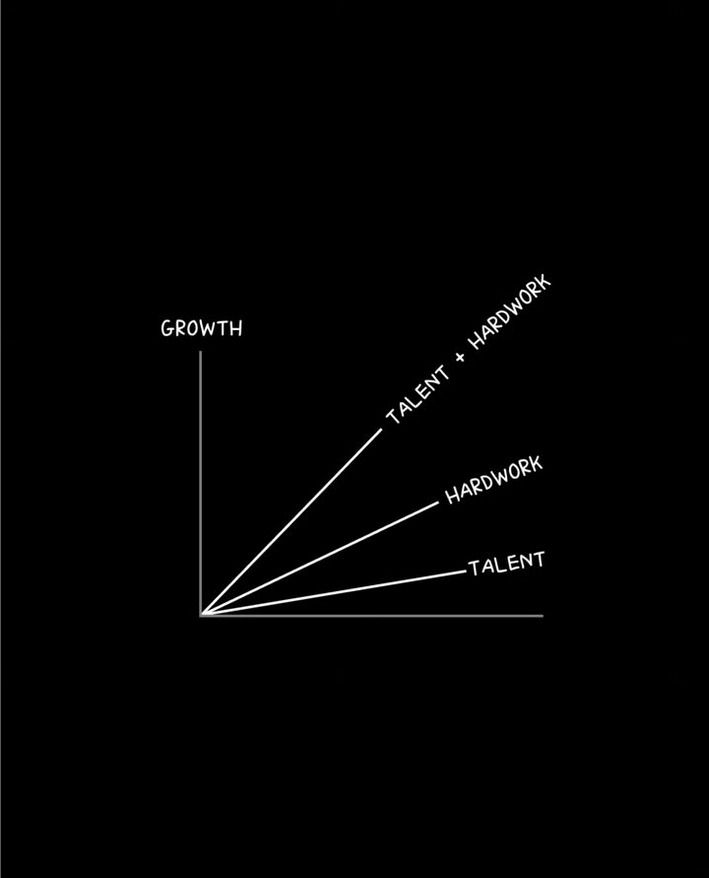

Talent Is Not Enough: Why Consistency and Discipline Shape Performance


The Myth of the "Rockstar" Employee (And a Better Way to Lead)
We’ve all heard it. It’s painted on gym walls, parroted in corporate seminars, and dropped by managers trying to spark a fire under their teams:
"Hard work beats talent when talent doesn’t work hard."
That line has been corporate gospel since the mid-1980s. It treats talent and grit like two fighters in a boxing ring, destined to clash forever. But after 30 years in the trenches of leadership, I’ve realized something that might ruffle a few feathers: this sports mentality doesn't work in the real world. In fact, it limits our people.
In the workforce, we shouldn't force individuals to choose between being the "talented genius" or the "gritty grinder." The real breakthrough happens when you stop separating the two.
I call it talented hard work, and it is far more accessible than you think.
The Hidden Cost of "Guns"
Every manager thinks they want a team full of "guns," those high-flying elite talents who breeze through tasks and look brilliant doing it. But we rarely talk about the heavy management tax that comes with them.
The problem with raw talent is that it often comes with an invisible ceiling. When tasks come easily to someone early on, they never learn how to navigate real struggle. The moment these high performers face a complex problem they cannot instantly solve, they hit a psychological wall. They can get trapped by their own egos, clinging to past achievements and resisting operational changes. They burn hot, they burn fast, and ultimately, they burnout.
You simply cannot build a stable, scalable enterprise on the backs of a few temperamental geniuses.
The Goldmine in the "Average"
If you asked me to name the most rewarding part of my 30-year career, I wouldn't point to revenue targets or KPI dashboards. I would tell you about developing people to their strengths that to bring out the best in them.
To me, the workers who are currently struggling, those dealing with poor performance or high absenteeism, are not a burden. Honestly, they are the most valuable opportunity in the building. They are easy to spot, straightforward to assess, and incredibly rewarding to coach.
I had seen in my time as a leader, potential in team members who want to t hrive and learn more, and actually invest quality time into their growth, a fascinating operational shift happens:
● They lack the ego: They are not afraid of looking foolish or asking questions while learning a new capability.
● They find their spark: Through structured support, they uncover practical talents they didn't even realise they possessed.
● They embrace thechallenge: Once they see that their hard work directly unlocks new capabilities and clear workplace victories, they genuinely start to enjoy the hustle.
This is a team I want to lead, is they want development, growth in their role, cross-trained in the teams, a team that wants to learn something new every time.
You Need Less Than You Think
So, how do you actually activate this hybrid potential? Do you need flashy office perks, massive corporate budgets, or complex incentive programs?
In reality, you need much less than that.
Talent and hard work are not mutually exclusive traits reserved for different personality types. Everyone has both inside them; they just apply them differently. Some pour that energy into sports, some into hobbies, and some choose to stay in the background simply because no one has ever challenged them to uncap their true potential.
Unlocking this drive doesn't require an executive board decree. It just takes a leader who pays attention.
When you cross-train a disengaged worker, you pull them out of the professional monotony that was causing their poor performance in the first place. The people you develop don’t sit around debating whether they are "talented" or "hardworking." They just find it empowering that they are suddenly doing both, seeing the direct results of their efforts, and taking pride in their output.
Stop hunting for corporate unicorns. Stop managing the fragile egos of your elite guns. Look at the quiet, struggling worker sitting right in front of you, hand them a new skill, and watch them mash right through the ceilings that everyone else built for them.